Other
The Whole Story on Traffic Lights For Your Work Site

Keeping a work site running smoothly often comes down to controlling how vehicles and pedestrians move through it, and this is exactly why traffic signals play such an important role on site. Without a clear system in place, trucks, machinery, and workers on foot can easily end up in the same space at the same time, which raises the risk of a serious accident.
A reliable traffic light controller manages this movement predictably, providing clear visual signals for when it’s safe to proceed and when to stop. Since work sites are often tight, busy, and constantly changing, having a high-quality traffic control system in place is not just useful; it is essential for safety.
Types of Traffic Lights
Fixed-Period
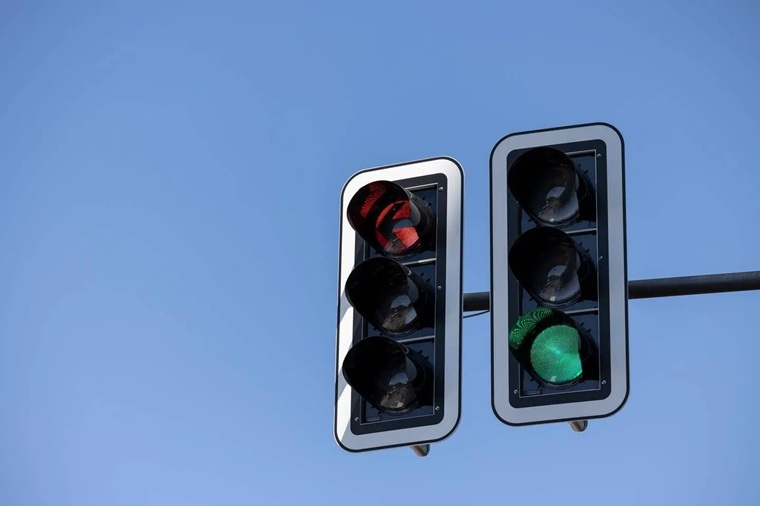
A fixed-period traffic light runs on a set timer, changing between red and green at regular intervals, no matter how much traffic is actually present. This makes it simple to set up and predictable for drivers, since everyone knows roughly how long they will be waiting. A fixed-period traffic light works best on sites with a steady, consistent flow of vehicles. However, it can be a bit inefficient during quiet periods, since the light still cycles through its full sequence even when the road is empty.
Vehicle-Triggered
A vehicle-triggered light relies on sensors to detect when a vehicle is actually present, rather than running on a fixed timer regardless of traffic. When an approaching vehicle slows down and stops, the sensor detects it and signals the traffic light to turn green, keeping site movement fluid and predictable. This helps reduce unnecessary waiting, especially on sites where traffic comes and goes throughout the day rather than flowing steadily. It is typically a smarter option than a fixed period light, particularly on narrower sites where one lane has to give way to the other.
Semi-Triggered
A semi-triggered system sits somewhere between fixed and fully triggered setups, using sensors on one side of the site while the other side runs on a set cycle. This is often used where one direction carries much heavier traffic than the other, since it allows the busier lane to flow more freely while still giving the quieter lane a fair turn. It offers a reasonable middle ground for sites that do not need the full complexity of a fully triggered system but still want some flexibility.
Fully Triggered
A fully triggered light uses sensors on both sides of the site, adjusting the signal based on real-time traffic in both directions at once. This tends to be the most efficient option overall, since it responds directly to what is actually happening on site rather than relying on assumptions or fixed timing. Because it constantly adjusts to demand, a fully triggered setup helps keep delays to a minimum, which is especially useful on busier sites with vehicles approaching from multiple directions throughout the day.
Types of Traffic Signals
Traffic Actuated
Traffic actuated signals respond directly to the presence of vehicles, using sensors embedded in the road or mounted nearby to detect movement and adjust the signal accordingly. This is closely tied to how vehicle-triggered and fully triggered lights operate, since both rely on this kind of real-time detection. Many modern traffic light controllers use this method, since it tends to be far more responsive than a basic fixed timer and helps reduce unnecessary stopping.
Manually Operated
A manually operated signal is controlled directly by a person, usually a traffic controller standing on site with a stop-slow sign or a handheld control unit. This gives the most direct control over the flow of vehicles, since a person can make quick decisions based on what they see happening in real time. It is especially useful during unpredictable conditions, such as when machinery is being moved or when the usual traffic pattern has been disrupted for the day.
Pedestrian
Pedestrian signals are designed specifically to manage foot traffic, giving workers a clear, separate signal for when it is safe to cross a road or active work area. These are especially important on busier sites, since foot traffic often gets overlooked when the main focus is on vehicles and machinery. Pairing a dedicated pedestrian signal with a standard traffic light controller ensures workers on foot never have to guess when it is safe to move.
Special/ Flashing Signals
Special or flashing signals are typically used to highlight a hazard or an unusual situation, rather than to manage a steady flow of traffic in the way a standard signal does. A flashing amber light, for example, might be used to warn drivers to slow down and proceed with caution, rather than instructing them to stop completely. These signals are a useful addition to a wider system of traffic signal controllers, since they help flag situations that a standard red or green light cannot fully communicate on its own.