Other
Staying Warm on the Road: A Guide to Gas Heating for Caravans

Few things beat a crisp morning at a campsite, until you realise the temperature inside your van matches the temperature outside. Whether you’re chasing the Snowy Mountains in winter, camping in the Flinders Ranges where desert nights drop sharply, or just touring Tasmania in shoulder season, a reliable heater turns a miserable night into a cosy one. For many Aussie caravanners, gas heating remains a popular choice. Here’s what you need to know before you buy.
Why Consider Gas Heating for a Caravan?
Gas heaters have earned their place in the caravan world for good reasons. LPG is easy to find across the country, from big-town servos to small regional suppliers. Your van probably already runs gas for the cooktop and hot water, so there’s often a bottle on board. And gas heats up fast, which matters when it’s 3°C and everyone’s in their pyjamas.
The big advantage of gas heating for caravan is independence. A gas heater doesn’t need a powered site, so it suits free camping and off-grid touring. Unlike a 240V electric heater, it won’t trip the park’s circuit or flatten your battery bank.
Flued Heaters vs Unflued Heaters
Before we go into the specifics, you need to know the important difference between flued and unflued heaters.
Unflued heaters, as portable “bullseye” style units, burn gas inside the living space and release their exhaust into the room. These are not appropriate for caravans. They consume oxygen, produce carbon monoxide and create condensation. Caravans are small, sealed spaces, so the risks are much higher than in a house.
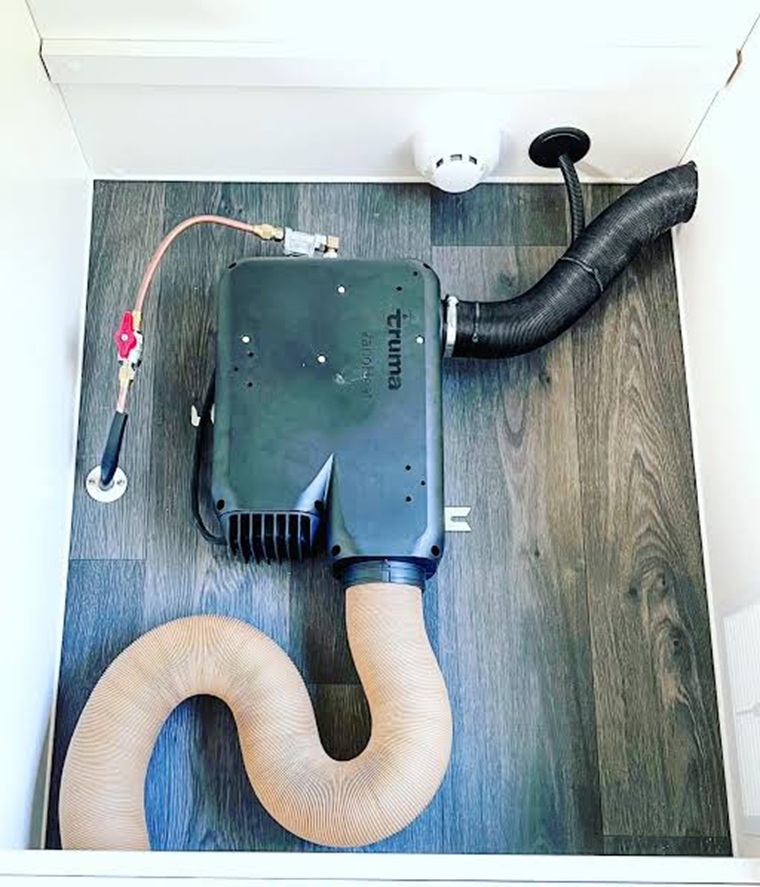
Flued gas air heaters are the safe option for caravans. These burn gas in a sealed combustion chamber and vent the exhaust outside through a roof or wall cowl. Fresh air is drawn in from outside, heated and then pushed through ducting into your living areas. The exhaust never enters your van.
What to Look For
- Compact size. Space is always tight in a caravan. Modern caravan gas heaters are designed to tuck under a seat, bed base or storage compartment, so you don’t lose valuable living space. If you’re comparing options, check the dimensions against the spot you have in mind.
- Fuel efficiency. A heater that sips gas means longer stays between refills. That matters if you’re touring remote areas where swapping a bottle isn’t easy. Low consumption is one of the biggest pluses for extended off-grid trips.
- Quiet operation. If the heater runs all night, you don’t want a roaring fan next to your pillow. Look for a unit designed for low noise so it can run in sleeping areas without keeping you awake.
- Ducting and outlets. A heater is only as good as its ability to get warm air where it’s needed. Good ducting lets you direct heat where you want, and compatible elbows, Y-pieces, T-joiners and adjustable air outlets make it easy to design a layout that suits your floor plan.
- Complete install kits. Buying the heater alone is rarely enough. A full kit includes the flue, cowl, ducting and fittings you’ll need.
Gas Air Heaters vs Diesel
It’s worth considering diesel too, as many caravanners swap between the two. Diesel air heaters are popular for their compact size and fuel economy, and they run off the vehicle’s or van’s fuel supply or a small tank. Gas has the advantage if you already carry LPG and want to avoid adding another fuel type.
Combi heaters are another option. These combine space heating and hot water in one unit, which suits those who want to save on space and gas fittings.
Installation: DIY or Professional?
The kits include full instructions, a handy owner could manage the job. However, gas work comes with real risks, including leaks, poor flue sealing and incorrect pressure, and Australian regulations apply, so hiring professional installation for safety and compliance is the more sensible approach. A licensed gas fitter will make sure everything is sealed, vented and tested properly. Check what your state requires for gas work in a caravan, as rules differ.
Safety Essentials
No matter what type of heater you go for, here are some safety practices that will help you:
- Install a carbon monoxide detector and a smoke detector, and test them before any travel.
- Make sure the flue and cowl are clear of snow, mud, leaves or debris.
- Check gas hoses and fittings for deterioration and leakage.
- Never use your cooktop and oven to heat the van.
- Service the system according to the manufacturer’s guidelines.
Our Take
For almost any caravanning enthusiast, a flued gas air heater is a very good choice. It heats quickly and doesn’t require mains power to work. It is also fuel-efficient and exhaust-free. Spend time planning your ducting layout, budget for the full kit and a proper installation, and you’ll enjoy warmth for many winters ahead.