Uncategorized
The Whole Story on Wood Thicknessers: Types and Features Explained

There is only one tool that makes any piece of wood uniformly even on both sides by shaving off the opposite side of the workpiece, known as a thicknesser. A woodworking thicknesser is an essential piece of equipment in every workshop, as its simple operation makes projects much easier to tackle. Thicknessers are used not only to make assembly more accurate but to reclaim weathered or warped pieces of wood and to make rough-sawn timber into usable stock. You can also remove dents and saw marks with a thicknesser as long as you’re using the right one.
Types of Wood Thicknessers
Benchtop
While not the smallest thicknessers you’ll come across, benchtop models are quite compact in terms of their capabilities, which can satisfy the needs of a small workshop. However, a benchtop wood thicknesser is used by DIY enthusiasts and beginner woodworkers due to its feature-packed, space-efficient footprint. Just keep in mind that the size of timber you can process with it is not something to brag about.
Standalone
If you do want to brag about your new thicknesser, then make sure to consider a standalone unit. Also known as floor-standing thicknessers, these have powerful induction motors that process pieces of timber with a height of around 380 mm to 500 mm. This also means that the machine is much larger, but that’s all because you get to use it in a wider variety of projects without any issue.
Combo
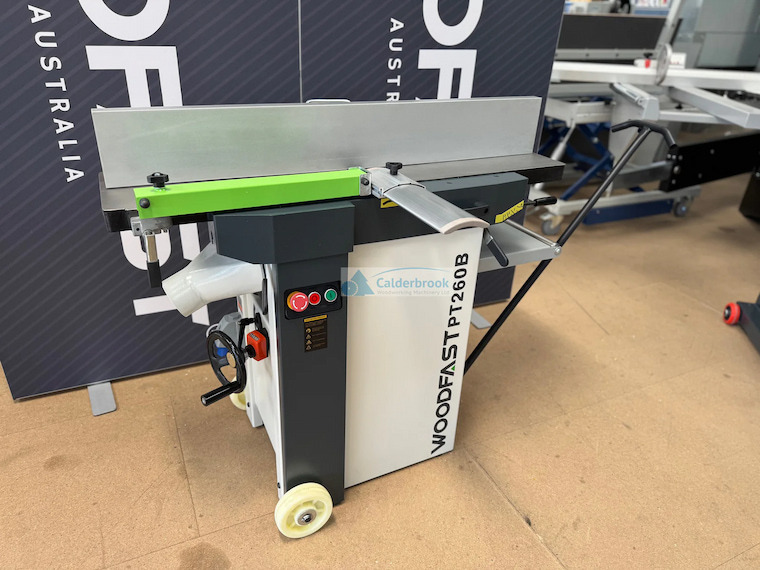
Combination planer thicknesser machines allow you to both straighten a piece of wood and make it even on both sides without the need for an additional piece of equipment. This 2-in-1 solution is a must-have if you want to make the most out of the available space in your garage/ workshop. With combo thicknessers, all you need to do is shift the table and dust hood and get an entirely different tool.
Manual vs Electric
The main difference between manual and electric thicknessers is convenience. The latter is much easier to operate and takes away much of the fatigue you would otherwise experience with the former. However, with manual thicknessers, you get a much simpler solution that is easier to repair and doesn’t require electricity to run, while being more affordable, but not as capable.
What Matters?
Capacity
The thicknesser’s size or capacity refers to the width of the boards you’re able to work on. The larger this capacity is, the wider the boards you can process and the more versatile your wood thicknesser machine is. However, this also means you’re getting a physically larger model, which means you need more space to accommodate it. Striking a balance between the machine’s capacity and size is key if you’re short on space in your workshop/ garage.
Blade/ Cutterhead
This type of woodworking tool, depending on the type of blade or cutterhead it uses, makes a big difference in how you’ll use the machine. For instance, a straight blade, being the more affordable option, can be resharpened and used for a long time without spending a fortune. Helical blades, on the other hand, are much quieter and don’t need to be resharpened, only replaced, but at a much later interval than straight blades need to be resharpened.
HP
Horsepower is what determines how much material your woodworking thicknesser can remove in a single pass without struggling. Lower HP machines are perfectly fine for light-duty work and softer woods, but if you plan on working with hardwoods or wider boards, a more powerful motor will make a noticeable difference. Higher HP also means smoother operation and less strain on the machine, especially during longer sessions.
Table Support
A stable and well-supported table is essential for achieving consistent results. The infeed and outfeed tables help guide the wood through the cutterhead, reducing the chances of uneven cuts. Models with adjustable or extendable table support provide better control when working with longer boards, preventing tipping or sagging that could affect the final thickness.
Snipe Reduce Mechanism
Snipe is a common issue where the ends of a board are cut slightly deeper than the rest. A good wood thicknesser will include features designed to minimise this, such as pressure bars, bed rollers, or locking cutterhead mechanisms. While no wood thicknesser machine eliminates snipe entirely, proper snipe reduction features can save you time and material by reducing the need for extra finishing work.
Motors
The type and quality of the motor play a major role in both performance and durability. Induction motors are typically found in larger, more powerful machines and are known for their quiet operation and long lifespan. Universal motors, often used in benchtop models, are lighter and more compact but tend to be louder. Choosing the right motor depends on how often you plan to use the thicknesser and the kind of projects you’ll be tackling.
Final Words
Choosing a woodworking thicknesser ultimately comes down to understanding your workspace, the type of projects you plan to tackle, and how often you’ll use the machine. With the right thicknesser in your workshop, preparing timber is not only faster but also more precise and far more enjoyable.