Lifestyle
Improving Home Accessibility: A Step-by-Step Guide to Exterior Wheelchair Ramps

A change in level can turn an otherwise accessible entrance, doorway or outdoor area into a difficult obstacle. Folding wheelchair ramps provide a practical way to bridge those gaps. The wheelchair ramp needs to suit the height crossed, the available approach space, the mobility aid in use and the way the ramp will be handled. Portable designs are particularly useful where access requirements change between locations, while more substantial solutions can suit regular access points.
Easier Access to Access Points
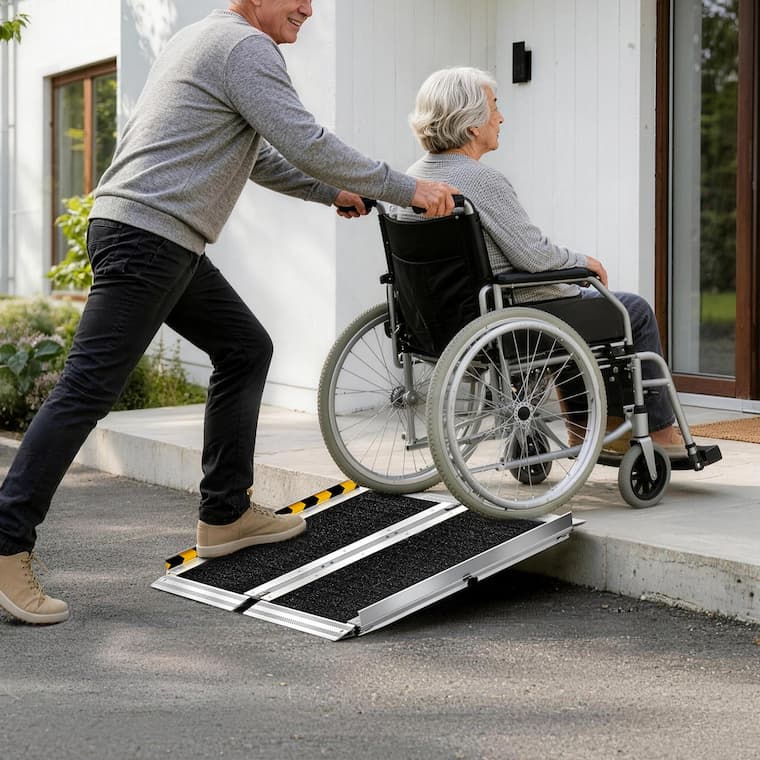
The broad range of exterior wheelchair ramps can be divided by how they are positioned and stored. Threshold ramps are intended for smaller level changes, while folding and multi-fold designs can provide a longer travelling surface while making storage easier.
Roll-up ramps prioritise compact storage, and telescopic designs can extend to the required length and then reduce for transport. Longer access ramps are suited to larger rises when enough clear space is available. There are also aluminium and uni-directional fibreglass construction, alongside features such as punch-plate surfaces, anti-slip finishes and portable formats.
Either way, both ends need to connect with a stable, reasonably clear surface so the wheelchair can transition on and off without an abrupt obstruction or awkward manoeuvre. For access routes forming part of regulated premises, Australian accessibility requirements also address features such as landings and other elements surrounding ramp access.
The important distinction is that these are not interchangeable categories. A short threshold solution may be convenient at a doorway but unsuitable for a substantial step; conversely, a long ramp can require considerably more setup space than a compact access point allows.
Exterior wheelchair ramps therefore need to be assessed according to the physical obstacle first. Installing heavy-duty exterior wheelchair ramps will secure safe daily entry across outdoor steps, porch thresholds, and uneven garden paths. For handicapped users, a well-matched ramp can make navigating changes in outdoor levels more manageable and independent.
Ramp Length for the Rise
Ramp length has a direct relationship with gradient. A higher step generally requires a longer ramp. The same, gentler slope is to be maintained. Australian accessibility guidance uses different gradient requirements depending on the situation, so a portable ramp should not automatically be treated as equivalent to a permanently constructed accessible ramp.
For new building work, AS 1428.1:2021 addresses ramp gradients, landings and related access requirements; its application should be considered where a ramp forms part of regulated building access. Available space matters as much. Measure the vertical rise, then consider how much horizontal room exists for the ramp to reach a safe position at the top and bottom.
Width is equally relevant: the ramp must provide adequate running space for the wheelchair and leave enough room for the user to approach it squarely. Weight capacity should include the combined load of the wheelchair and occupant, rather than the wheelchair alone.
Materials, Surfaces and Practical Design
Construction affects how a ramp behaves in everyday use. Aluminium offers lightweight construction and appears across several portable and access formats, making it practical if a ramp needs to be moved or folded. Uni-directional fibreglass is another construction option. Surface treatment is another important consideration.
Punch-plate and other anti-slip surfaces are designed to provide traction, while textured or grit-based surfaces can also be used to improve grip. This becomes particularly relevant when weather introduces moisture to an exterior route. For people living with a disability, accessible outdoor routes can play an important role in supporting safer, more practical everyday movement.
Australian accessibility guidance stresses that accessible surfaces should be firm and slip resistant in wet as well as dry conditions. A ramp should therefore be positioned on a stable surface and kept clear of conditions that could compromise traction. The most useful selection process comes down to the relationship between the ramp and environment.
A portable folding ramp may be appropriate where the access point changes regularly; a telescopic model can be useful where adjustable length and transportability are priorities; and a longer fixed-position solution may make more sense where there is a substantial rise and sufficient room for deployment.
- Measure the rise and available run before selecting a length, especially where a steeper gradient could affect independent wheelchair use.
- Confirm the rated capacity against the combined weight of the user and mobility equipment to remain a genuine safety boundary.
- Consider the approach and landing areas as carefully as the ramp itself, ensuring there is enough room to align with the ramp and manoeuvre safely.
- Prioritise a suitable traction surface for the environment, particularly where rain or other moisture is likely.
- Test the handling requirements before relying on a portable design, including how it will be folded, extended, carried and stored between uses.
Where Access Grants Everyday Accessibility
The best ramp is ultimately the one whose dimensions, gradient, construction and handling characteristics fit the access problem in front of it. A small threshold may call for a compact solution, while a larger rise can demand a longer design and more careful planning. Materials and surface treatments then refine the choice, particularly for outdoor conditions.