Kitchenware
One Blade, Three Virtues: The Story Behind the Santoku Knife

There’s a knife sitting in professional kitchens and home drawers across the world that many cannot name on the spot, but they’ve almost certainly used or admired one. Sleek, elegant, and functional, the santoku has quietly conquered kitchens far beyond its homeland, carrying the grace and heritage of Japanese craftsmanship.
A Name That Tells the Whole Story
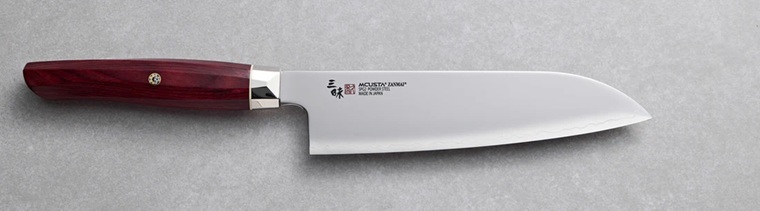
“Santoku” is a Japanese word that can be translated roughly as “three virtues” or “three uses.” Depending on who you ask, the three virtues may refer to its three primary functions, which include chopping, slicing, and dicing, or the three target foods it was originally designed for: fish, meat, and vegetables. Both interpretations seem equally accurate as the santoku knife lives up to both expectations.
The knife originated in Japan in the mid-20th century, when Japanese chefs began incorporating foreign ingredients and cooking techniques. The older single-bevel knives seemed less efficient in handling these new requirements. However, the santoku bridged that gap by combining elements from the Japanese and Western knives while adding a unique twist. The Western-style double-edged blade was adapted to become lighter and thinner and integrated into a blade shape suitable for the downward chopping technique used in Japanese households.
What Sets It Apart
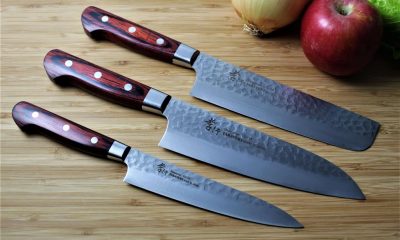
Hold a multipurpose santoku knife in your hand, and you’ll soon realise what makes it unique. The blade is slightly shorter than a chef’s knife, typically around 5 to 7 inches, with a flat edge that runs almost parallel to the cutting board before curving gently at the tip. This characteristic design encourages a straight up-and-down movement, rather than the rocking motion typical of Western kitchen knives.
Apart from its shape, the santoku has a much lighter and thinner but sharper blade. Many santoku knives feature granton edges (a series of oval holes in the blade) that decrease friction during slicing. This prevents delicate foods like cucumbers, carrots, potatoes, raw fish, and soft cheese from sticking to the blade.
For cooks who don’t spend hours a day at a board, this knife is more manoeuvrable and less intimidating. Its smaller size makes it approachable for the home cook or anyone who prefers a lighter, more nimble tool. The well-balanced blade with weight distributed evenly between the handle and the steel reduces hand fatigue during longer prep sessions.
What Are Santoku Knives Best For?
The Japanese santoku knife really does justice to its “three virtues” in everyday cooking. It shines brightest when precision and control matter more than raw power.
- Preparation of vegetables. The flat cutting edge and slender blade make it easy to slice through roots, tomatoes, and leafy greens without tearing or crushing, which a heavier knife may cause. For someone who often makes meals that require vegetable ingredients, it is more than worth keeping this knife around.
- Cutting fish and boneless meat. The delicate nature of the knife’s blade allows you to cut proteins with minimal tearing, making it perfect for slicing fish or portioning chicken and pork fillets. However, this knife should not be used to cut through bone or hard squash since these require greater force and pressure.
- Repetitive knife work requiring precision. This includes mincing garlic, thinly slicing mushrooms, finely dicing shallots, and other tasks requiring precise, controlled cuts.
How to Take Care of a Santoku Blade
With proper treatment, a good-quality Japanese santoku can last a lifetime. Here are a few simple practices that can make a significant difference:
- Hand-washing is non-negotiable. Dishwashers are lethal for good knives because of the intense heat, strong detergent, and rattling against other utensils, which dulls the edge and can damage the handle. Always hand-wash it with warm, soapy water and dry the blade.
- Cut food only on a wooden or plastic cutting board. Using glass, ceramic, or stone surfaces ruins the edge of the blade very quickly. Wooden and quality plastic boards are safer and kinder to the knife.
- Hone regularly, sharpen sparingly. Hone the blade before each use with a honing rod or ceramic honing stick. Once or twice a year, sharpen it on a whetstone.
- Protect the blade. Knife blocks, knife strips, and blade covers help preserve the integrity of the blade. Leaving a santoku loosely in a drawer leads to nicks and dullness.
Why It Deserves a Place in Your Kitchen
The santoku works so well because it is designed not for show, but for function. It is one of those tools that earns devotion quietly, through repetition and reliability rather than drama. It doesn’t require a particular cutting technique or professional background. It simply does what it was made for without fail, no matter how many times you chop, slice, or mince. This is not a trendy knife, but a versatile and efficient all-rounder that deserves a spot in every kitchen.